Showing posts with label middle income group. Show all posts

28 October 2010

Toronto’s 2010 Mayoral Election: A product of deep seated resentment about economic realities and trends?


Two days after Toronto's municipal election Michael Valpy and Daniel Leblanc in the Globe and Mail (“Federal political parties take notes on Rob Ford’s strategy,” Oct. 27, 2010) made passing reference to what is perhaps the best explanation of the results of the mayoral election. 

Rob Ford was able to tap into and hold onto a broad and deep vein of resentment and hostility arising from tough economic times for the vast majority of wage earners in the city. 

10 July 2010

UofT EDGE Magazine: Goodbye, middle-income neighbourhoods -- Profile of the Neighbourhood Change Community University Research Alliance

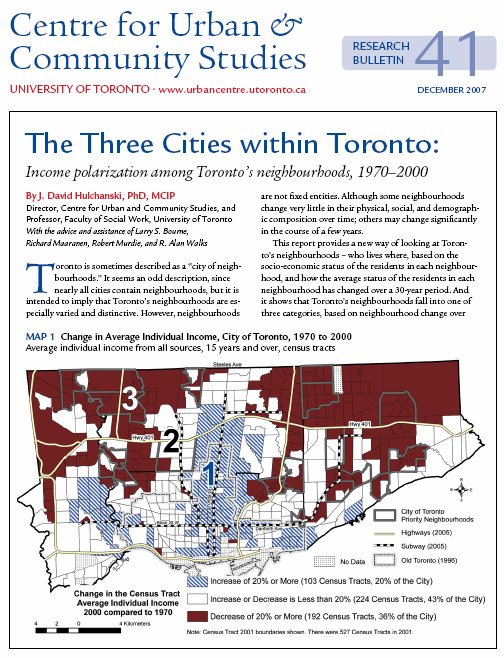
David Hulchanski. Photo by John HryniukSocial work professor and housing expert David Hulchanski and his research team at U of T’s Cities Centre (formerly the Centre for Urban & Community Studies) woke the world up to a different view of Toronto in 2007 when the centre released a report called The Three Cities within Toronto: Income polarization among Toronto’s neighbourhoods, 1970-2000.
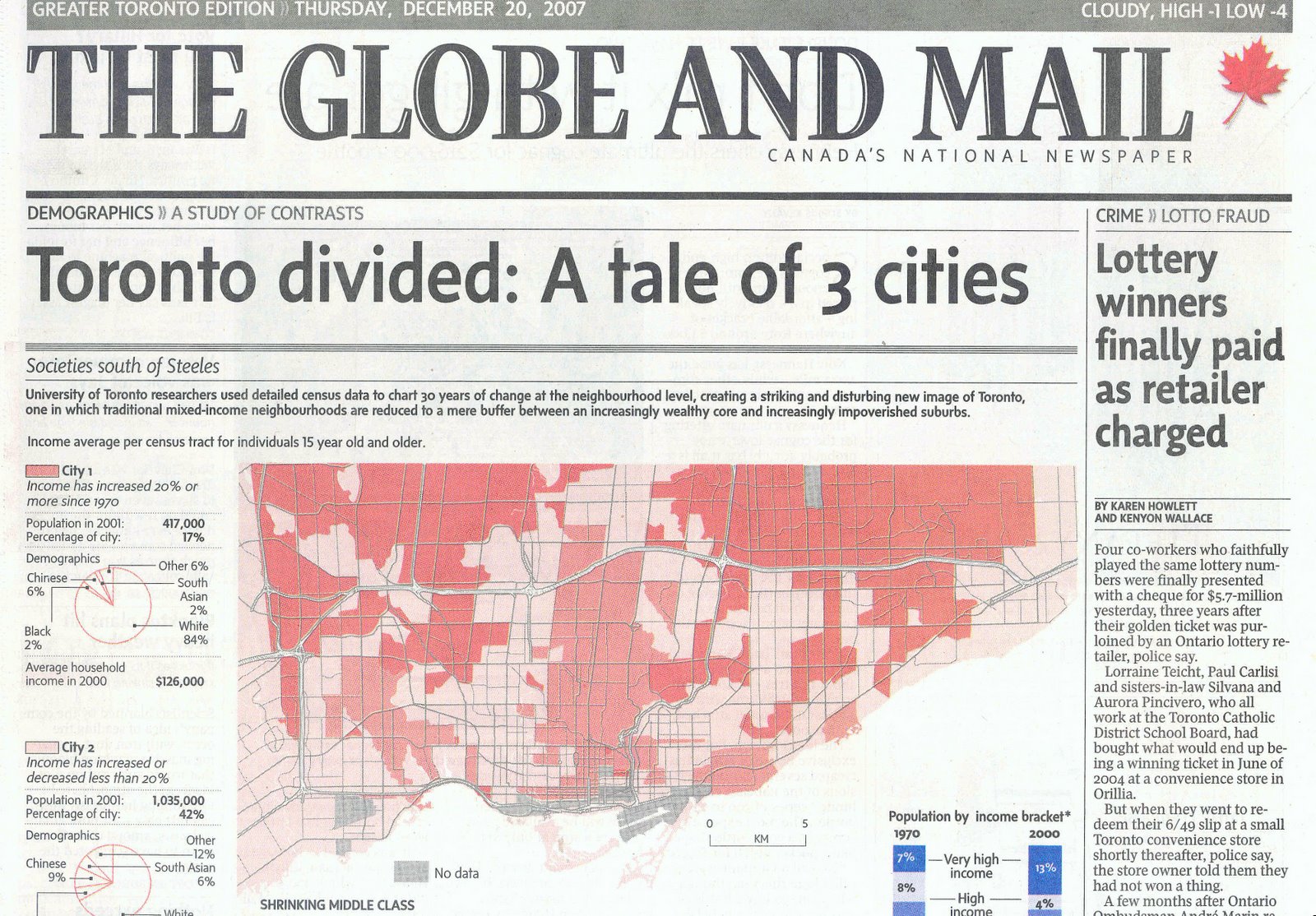
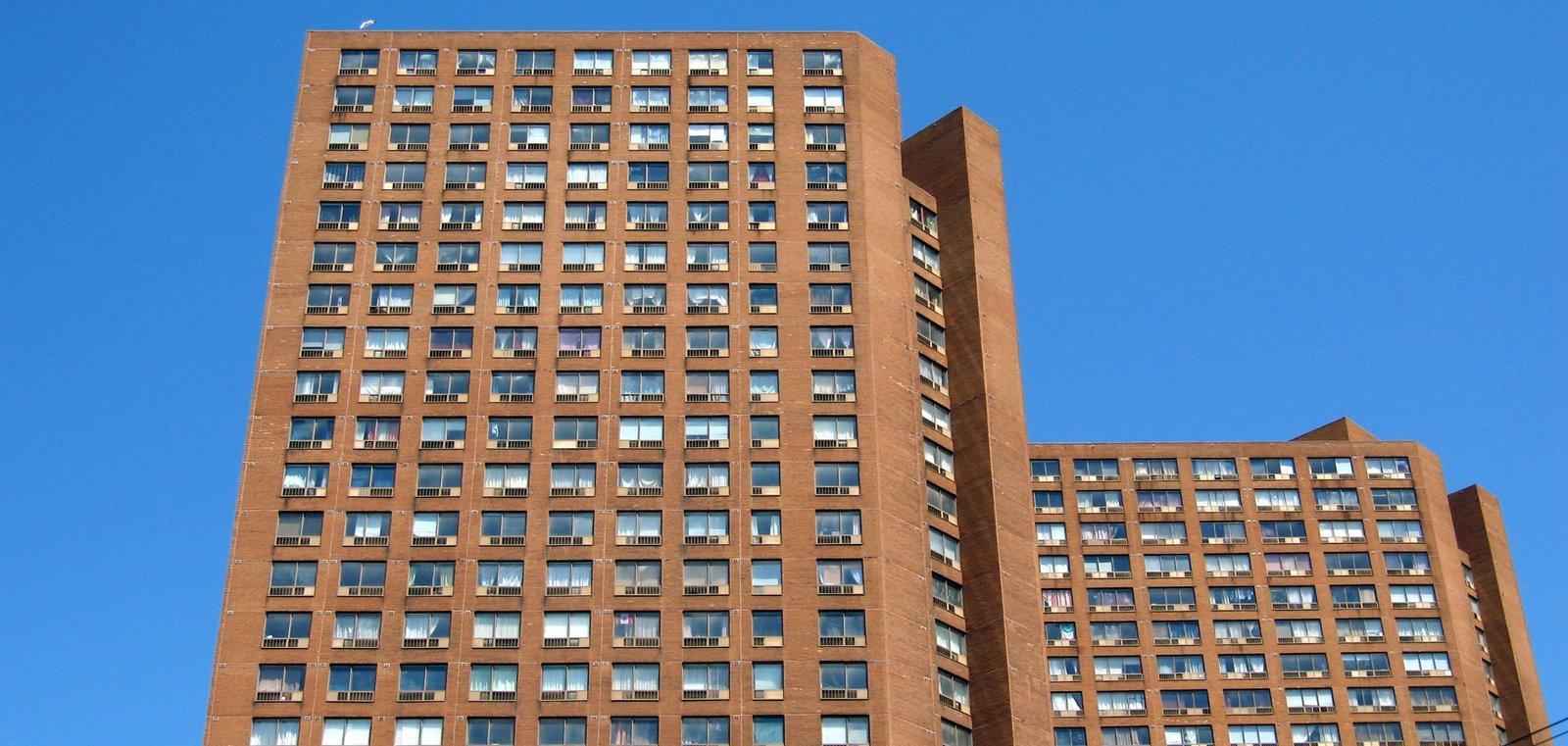
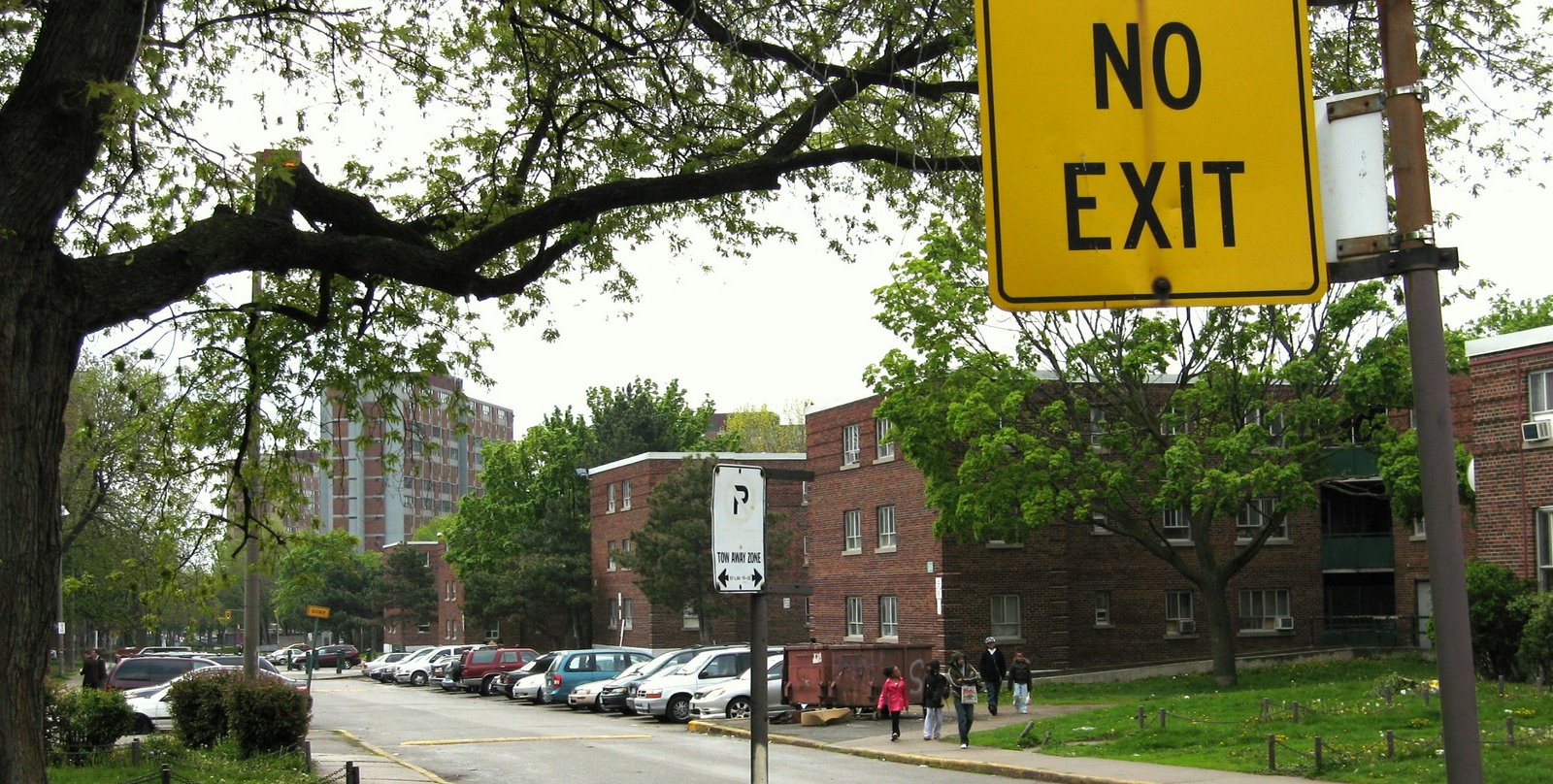
 The Toronto Star and the Globe & Mail created special sections based on the elaborate maps Hulchanski’s team had drawn to indicate how the number of middle-income neighbourhoods had decreased over 30 years, only to be replaced by a growing number of low-income areas mainly — and surprisingly — in the city’s inner suburbs.
“People now have a much better idea of what is happening in this city in terms of the widening income gap and neighbourhood polarization by

21 December 2008

Housing as a Financial Weapon of Mass Destruction: Homeownership ideology & self-interest trump responsible housing for low-income households

The prosperity of a few years ago, such as it was — profits were terrific, wages not so much — depended on a huge bubble in housing...”  -- Paul Krugman, NY Times, Dec. 22, 2008
'What an ideology is, is a conceptual framework with the way people deal with reality... Everyone has one. You have to - to exist, you need an ideology. The question is whether it is accurate or not."  
-- Alan Greenspan, former chairman of the Federal Reserve, from 1987 to 2006, at the Congressional House oversight and government reform committee on 23 October 2008

Who would think that housing speculation, aided by government subsidies and tax policies, would be one of the "financial weapons of mass destruction"?

Something so simple as ensuring that all people have an adequate place to live became a financial weapon, a means for some to get rich quick, for some to collect votes, and for some to collect consulting fees for spouting conventional wisdom.

There is no "magic bullet" financial formula to close the gap between the cost of adequate housing and the low incomes of many

20 November 2008

Toronto: Poor city beside rich city


PAUL LACHINE/NEWSART
The now well-documented rise in income inequality, income polarization and ethnocultural and skin colour segregation are city-destroying trends, writes David Hulchanski.
Loss of middle-income jobs creates urban map with swathes of poverty and pockets of wealth
By David Hulchanski, op-ed in Toronto Star,  Nov 20, 2008
"We heard as well about parents whose struggle to hold down two or three jobs leaves them with no time or energy to parent, of youth being humiliated by the obviousness of their poverty, of the impact of precarious and substandard housing on their ability to study and learn and engage with friends, and about the numerous other daily stresses of living on the margins of a prosperous society." – Review of the Roots of Youth Violence, Vol. 1, p. 31.

     We learned last week that among the roots of youth violence is the lack of good jobs – jobs that support a family, jobs that support an average lifestyle, jobs that support good quality housing. Though we already knew this, as a society we need to stop moving in the opposite direction.
     It wasn't too long ago that our language did not include terms like "good jobs," "bad jobs" or "the working poor." How could you